
Care
Make a pack of pads last longer
Gel wears out in the drawer more often than it wears out in use. Four habits do almost all of the work.
The liner is not packaging
Every pad arrives face down on a slick plastic sheet. That sheet is a permanent part of the pad, not a wrapper, and the single biggest difference between a pack that lasts and one that does not is whether the liner went back on afterwards.
Gel left in the open air collects lint from the first thing it touches, and lint does not come off. Press each pad back onto its own liner while it is still tacky and the surface stays clean for the next time.
Peel from the corner, always the same way
Lift a pad by one corner and roll it off, rather than pulling it straight up from the middle. A straight pull stretches the gel layer away from its cloth backing, and once those two have started to separate the edge will curl on every later use.
The same applies when you put it back on the liner. Lay one edge down first and let the rest follow, so no air pocket gets trapped under the middle.
Keep them flat, cool and closed
Pads want a drawer, not a window sill and not the glovebox of a car. Warm gel goes soft and smears at the edges, cold gel goes stiff and cracks when you unroll it. Room temperature and out of the light is the whole requirement.
Flat matters as much as cool. A pad stored bent around something keeps that bend, and a pad that will not lie flat has already lost half its contact area. Two of our packs come with a holder for exactly this reason, and a rigid envelope does the same job for the ones that do not.
- Liner back on within a minute of coming off.
- Peel and re-lay from a corner, never from the middle.
- Drawer temperature, away from sun and heaters.
- Stored flat, never folded or stacked face to face.
When a rinse helps and when it does not
A pad that has picked up dust but still feels tacky can sometimes be brought back with a single drop of water smoothed across the gel with a clean fingertip, then left to sit face up for a couple of minutes before the liner goes back on. That is the whole trick and it works only once or twice.
A pad that has gone dull, hard, or shiny in a dry patch is finished, and no amount of water brings it back. That is what replacement packs are for, and it is the reason we cut most of ours in multiples rather than pairs.
Packs this note is about
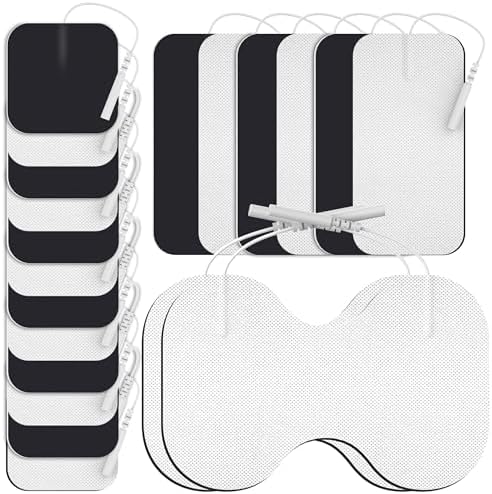
DOMAS TENS Unit Electrode Pads (XL)
TENS 7000 and other 2 mm pin units, DOMAS units
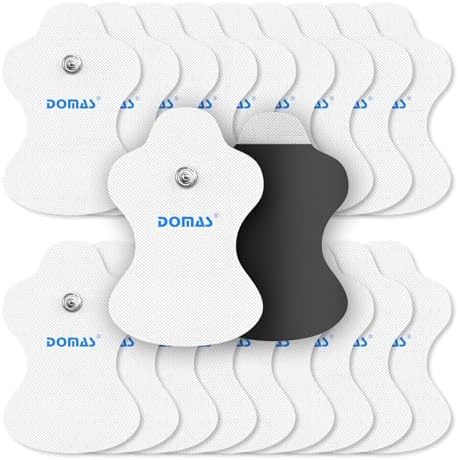
20 Pcs Replacement Pads Compatible with Omron TENS Units
Omron PM series
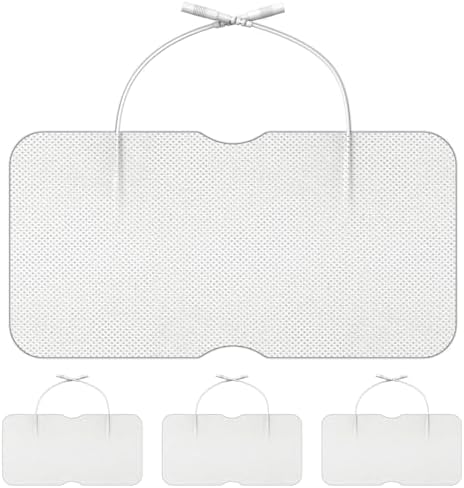
DOMAS Large TENS Pads for Lower-Back Pain Relief
TENS 7000 and other 2 mm pin units, DOMAS units
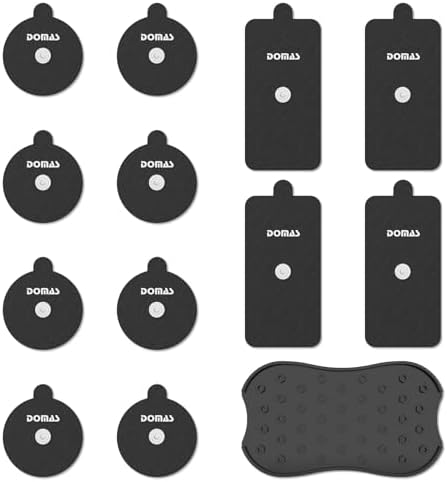
DOMAS TENS Electrode Pads
PowerDot 2.0
More from the bench
Pin or snap: which connector you have
Every pad on this site joins a wire in one of three ways, and they do not cross over. Two minutes with the wire in your hand settles which packs are yours.
When a pad stops sticking
Half the packs people give up on still have life in them, and half the ones they keep using are already done. Telling those apart takes a look and a fingertip.
Modes, timers and intensity steps
Three controls sit on the front of a unit like ours. What each one changes, in plain terms, and nothing about where anything goes.