
Connections
Pin or snap: which connector you have
Every pad on this site joins a wire in one of three ways, and they do not cross over. Two minutes with the wire in your hand settles which packs are yours.
Look at the wire, not at the unit
People usually start by naming the unit, and that is the slower road. Two units from the same maker can carry different leads, and a wire bought as a spare may end differently from the one that came in the box. The wire is what actually meets the pad, so the wire is what decides.
Pull one lead out of the drawer and look at the last half inch of it. There are only three answers, and they look nothing like each other once you know what you are looking at.
The pin
A pin lead ends in a thin straight post of bare metal, about the thickness of a pencil lead. On this shelf that post is 2.0 mm across, which is the size that TENS 7000 and a long list of similar units have used for years.
The pad it goes into has a small flap of plastic on one corner, the tail, with a socket buried in it. You push the post in until it stops. Nothing clicks and nothing latches; the grip is friction, which is why a tail that has gone loose and floppy is worth replacing even though nothing looks broken.
The snap
A snap lead ends in a shallow metal cup, and the pad carries a raised metal button on its back. Press one onto the other and it clicks, the same fastening you find on a jacket. Once seated it holds hard enough that the pad comes off the wire only when you pull it deliberately.
Snap is what the Omron PM line uses, and it is the connection on four of the packs we make. A snap pad cannot be made to take a pin: there is no socket in it, only the stud.
The magnetic pod
The third answer is not a plug at all. A PowerDot 2.0 cable ends in a flat contact that finds its own seat and holds by magnet. There is no post and no cup, so the pads have their own backing and only fit that system.
If your lead has no visible metal post or cup and simply sticks to the pad, this is the one you have.
Sizes come after the connector
Once the connector is settled, everything else is a matter of preference. Pin pads here run from small 2x2 inch squares up to a 4x6 inch rectangle and a long lumbar shape. Snap pads run from the standard replacement size up to a 4.75 by 3.0 inch panel.
Getting that order the wrong way round is the single most common mistake we hear about. Nobody returns a pad because it was the wrong shape. They return it because it would not join the wire.
- Thin metal post on the wire: pin, 2.0 mm on this shelf.
- Metal cup on the wire, stud on the pad: snap.
- Flat contact that holds itself: magnetic pod.
- Shape and pack size are chosen after that, never before.
Packs this note is about
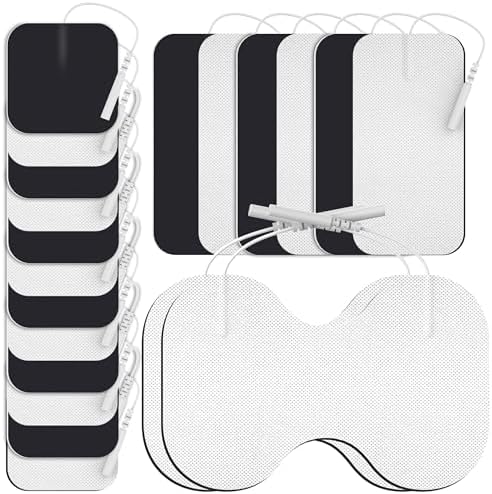
DOMAS TENS Unit Electrode Pads (XL)
TENS 7000 and other 2 mm pin units, DOMAS units
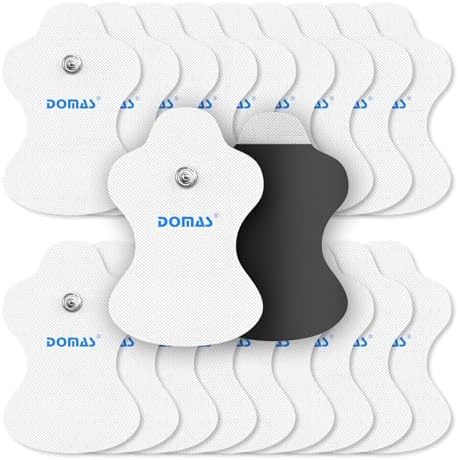
20 Pcs Replacement Pads Compatible with Omron TENS Units
Omron PM series
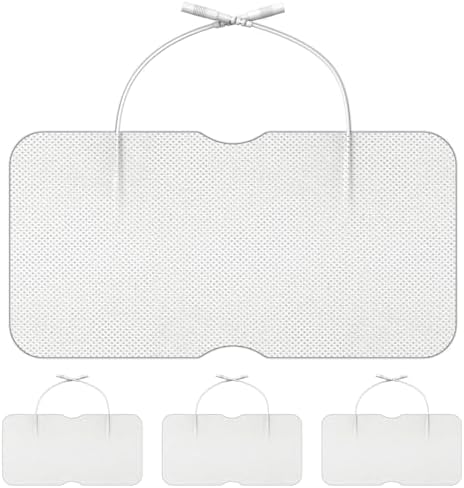
DOMAS Large TENS Pads for Lower-Back Pain Relief
TENS 7000 and other 2 mm pin units, DOMAS units
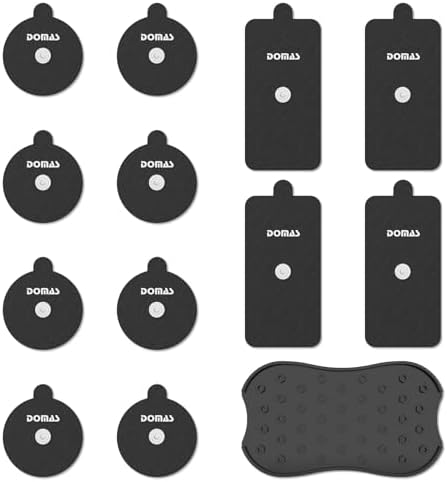
DOMAS TENS Electrode Pads
PowerDot 2.0
More from the bench
Make a pack of pads last longer
Gel wears out in the drawer more often than it wears out in use. Four habits do almost all of the work.
When a pad stops sticking
Half the packs people give up on still have life in them, and half the ones they keep using are already done. Telling those apart takes a look and a fingertip.
Modes, timers and intensity steps
Three controls sit on the front of a unit like ours. What each one changes, in plain terms, and nothing about where anything goes.